The building came first
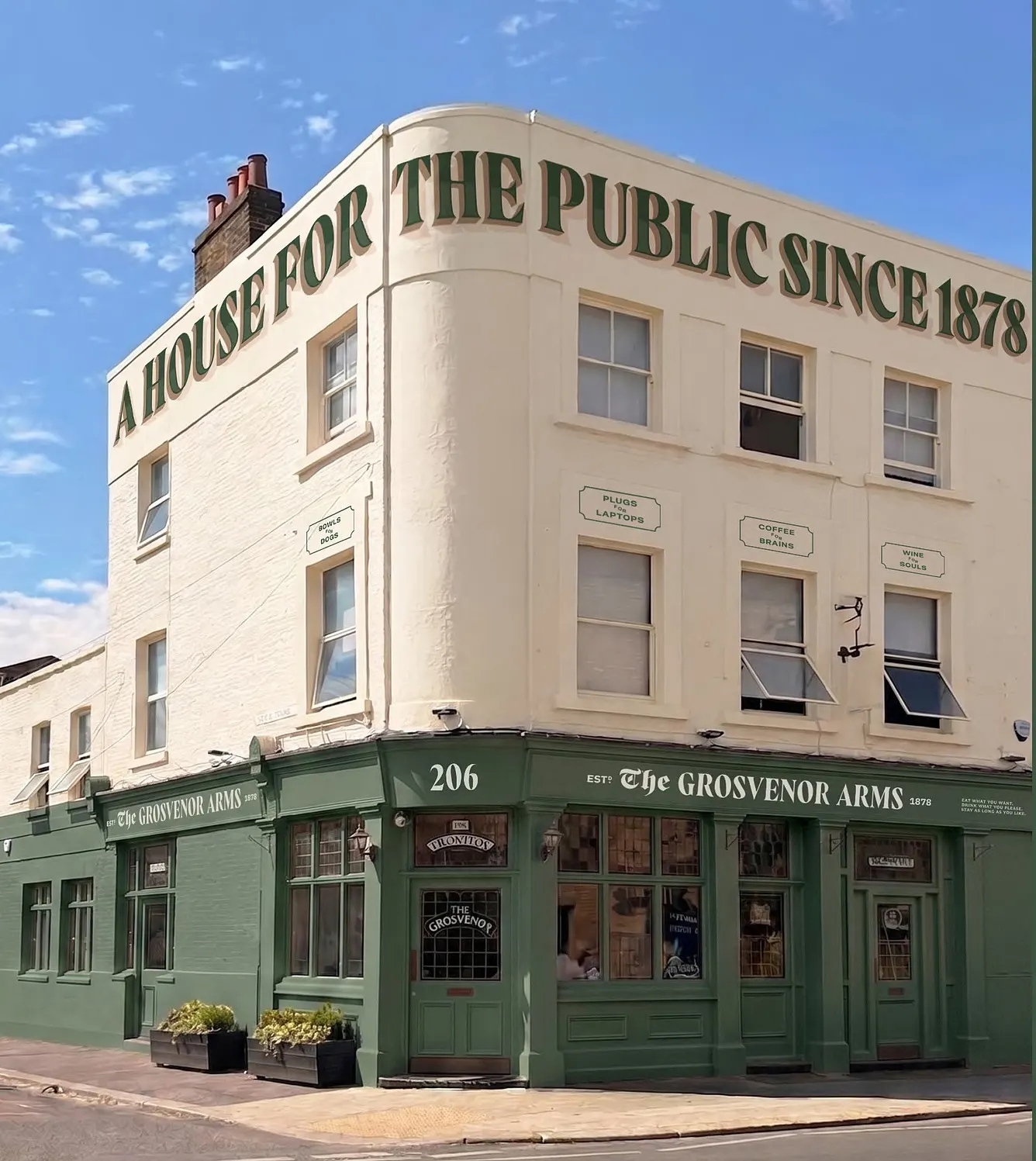
In 1878 this corner was on the edge of things. Earlsfield barely existed as a name; the fields either side of the Wandle still grew flowers and vegetables for the London markets, and Garratt Lane was the road the carts went up before dawn.
The railway changed that, as it changed everywhere south of the river. Terraces went up, the market gardens were sold off, and by the turn of the century the pub on the corner had a photographer outside it and most of the street lined up for the picture.
That photograph still exists. H. Vidler, proprietor, stands in the doorway. The sign above reads The Grosvenor Arms in the same blackletter we have kept. Children sit on the kerb at the front. Nobody in it came out for the photographer — they were already there.
A house is somewhere you can stay. A public house is somewhere anyone can stay.
What we changed, and what we did not
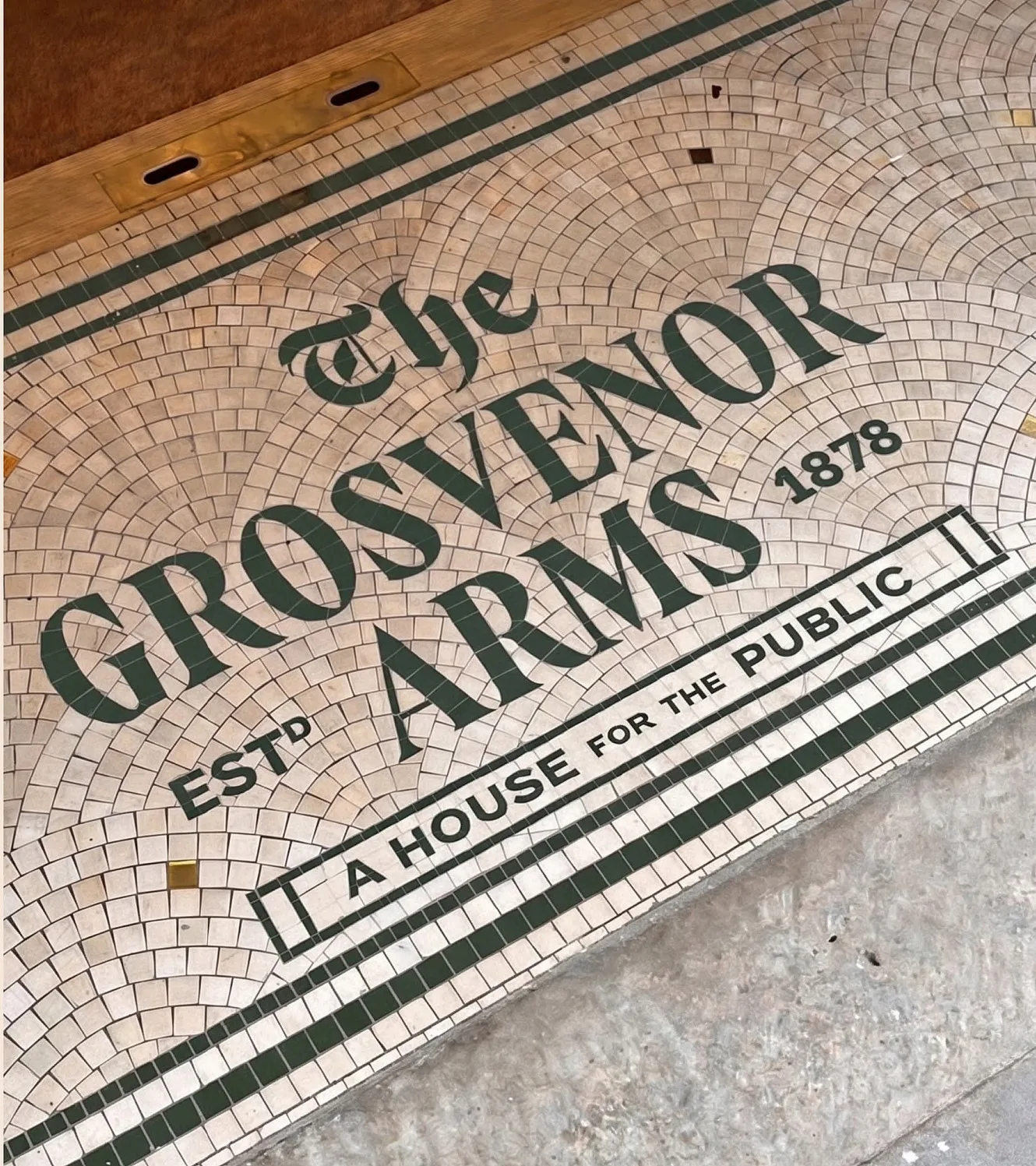
The restoration is deliberately conservative. The original marque at the top of the building has been repainted rather than replaced. The mosaic threshold has been relaid, tile by tile. The ground floor keeps its Victorian layout, including the snob screens, because a pub that has been divided into nooks for a century knows something about how people want to sit.
What is new is what the building is asked to do. The coffee machine sits on the bar in plain sight, not tucked at the back. The first floor, which was function space and storage, is a room you can work in all day for the price of a coffee, or hire outright for a party. The kitchen runs from breakfast to dinner rather than from noon to three.
None of that is a departure from what a public house is. It is a return to it. Pubs were the neighbourhood's front room, its post office, its meeting hall and its labour exchange long before they narrowed into evening drinking venues.